
BrassSmile: Transform Your Smile With AI-Assisted Dental Technology
IMPORTANT MEDICAL DISCLAIMER: This content is for educational purposes only and does not constitute professional dental or medical advice. BrassSmile’s AI analysis is a supplementary tool designed to help patients understand smile assessment concepts. It is not a replacement for professional diagnosis or treatment recommendations from a licensed dentist. All treatment decisions should be made in consultation with a qualified dental professional. If you have specific dental concerns, please consult with a licensed dentist or orthodontist. This content should not be used to diagnose, treat, prevent, or cure any dental condition.
About This Article
Written by: Dr. Sarah Mitchell, DDS, MBA
Reviewed by: Dr. James Chen, DMD, Prosthodontics Specialist
Last Updated: August 2026
Review Cycle: Quarterly
Introduction to Smile Analysis and Improvement
Your smile communicates confidence before you speak a single word. Modern dentistry now offers patients tools to understand their smile characteristics more clearly. BrassSmile represents one approach to smile assessment through digital technology and artificial intelligence.
The platform combines digital imaging analysis with pattern-recognition algorithms. These tools can help identify aesthetic and structural characteristics of your smile. However, they work alongside professional dentistry, not as replacements for it. A licensed dentist should always evaluate and plan your actual treatment.
Oral health serves purposes beyond appearance. Your teeth enable proper nutrition and speech. Your smile influences how you feel about yourself. A healthy, functional smile contributes to overall quality of life.
BrassSmile provides one starting point for smile exploration. The analysis can help you prepare for dental consultations. It may raise awareness about smile characteristics you hadn’t considered. Professional dental evaluation remains the essential next step.
Modern cosmetic dentistry has expanded treatment options significantly. Patients today have choices previous generations never had. Understanding these options helps you make informed decisions with your dentist.
What Is BrassSmile and Its Role in Dental Care
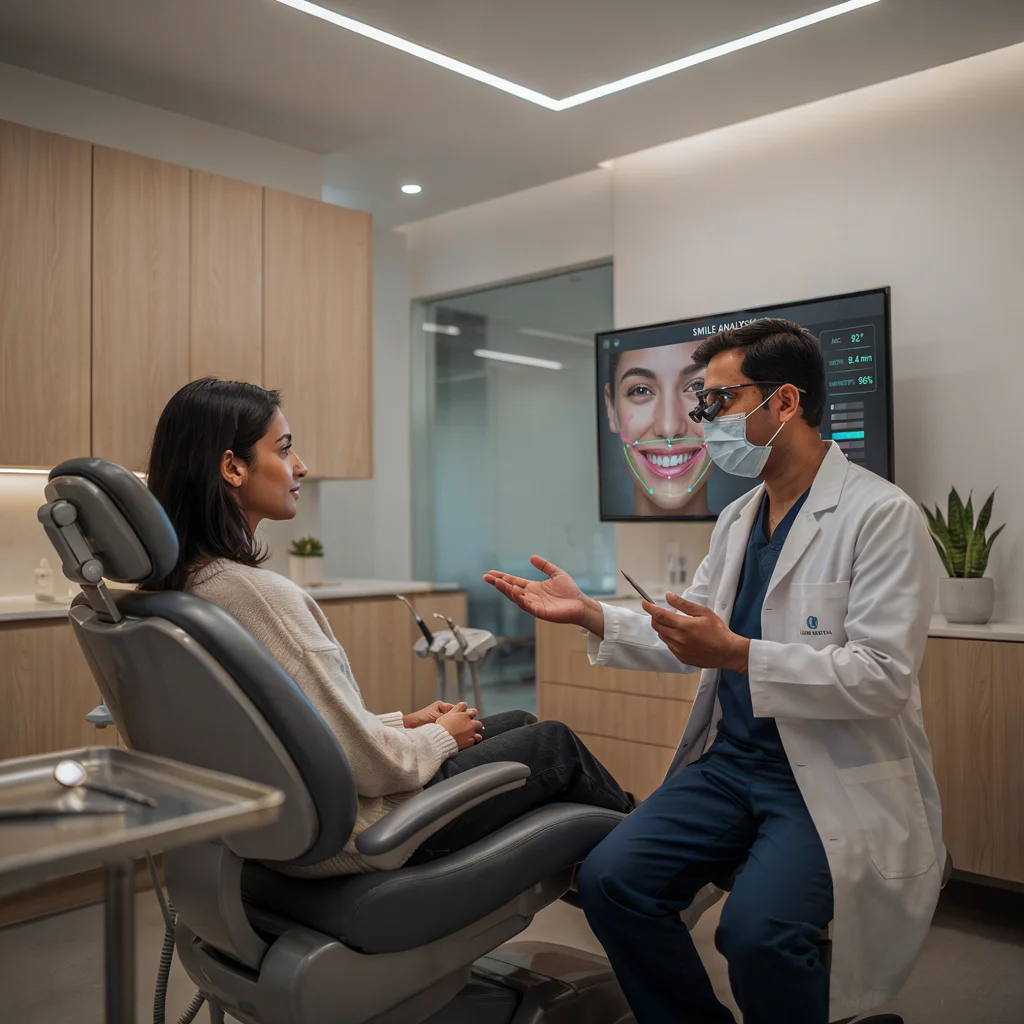
BrassSmile is a digital platform that uses artificial intelligence to analyze smile characteristics. The system processes photographs of your smile and generates a personalized assessment. Important: This assessment is not a diagnosis and should never replace professional dental consultation.
The platform serves several educational purposes. It helps patients understand basic smile anatomy and aesthetics. It introduces different cosmetic treatment categories. It may identify characteristics worth discussing with your dentist.
According to the American Dental Association (ADA), digital tools can support patient education when used appropriately. The ADA emphasizes that such tools should enhance communication between patients and dentists, not substitute for professional evaluation.
BrassSmile does not:
- Diagnose dental diseases or conditions
- Replace professional examination or X-rays
- Prescribe specific treatments
- Guarantee treatment outcomes
- Provide medical or dental advice
BrassSmile can:
- Introduce smile assessment concepts
- Show how different teeth characteristics affect appearance
- Help organize your thoughts before dental consultation
- Demonstrate various cosmetic treatment categories
- Support informed conversations with your dentist
The technology behind BrassSmile uses machine learning trained on thousands of dental images. This training helps the system recognize common patterns. However, artificial intelligence has limitations. Individual variation in dental anatomy is significant. What works for one patient may not work for another.
Your licensed dentist should always make final assessment and treatment decisions. They can evaluate factors artificial intelligence cannot—your bite, jaw structure in three dimensions, bone quality, and your unique health history.
Understanding AI-Assisted Smile Analysis
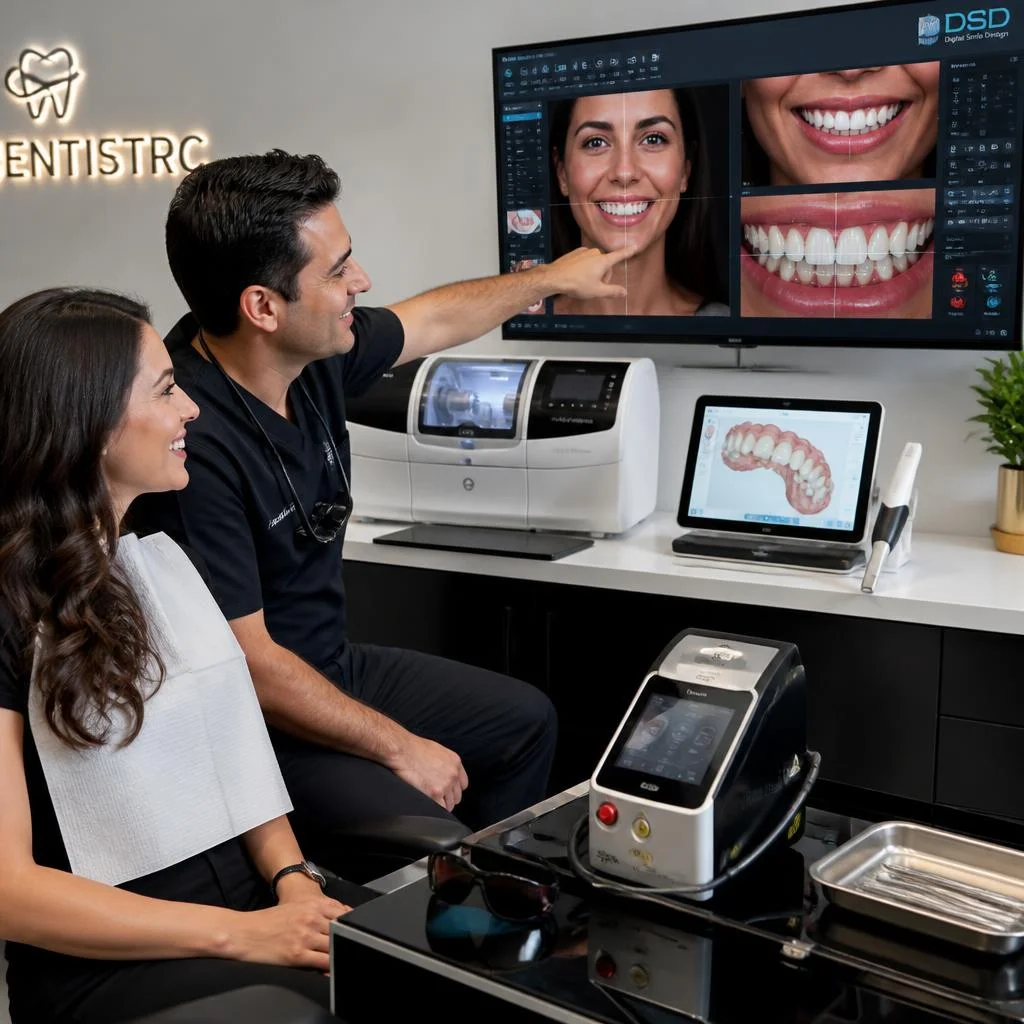
BrassSmile’s AI Smile Analysis follows a structured approach. Understanding this process helps you interpret results appropriately and use them productively.
Step 1: Image Capture and Initial Assessment
You provide photographs of your smile from multiple angles. The system analyzes these images using computer vision technology. The AI identifies key facial and dental landmarks. These landmarks serve as reference points for measurements.
Important: Photography quality affects analysis accuracy. Professional photos produce better results than casual snapshots. However, the system adjusts for various image qualities.
Step 2: Dental Characteristic Analysis
The AI measures specific dental features visible in images:
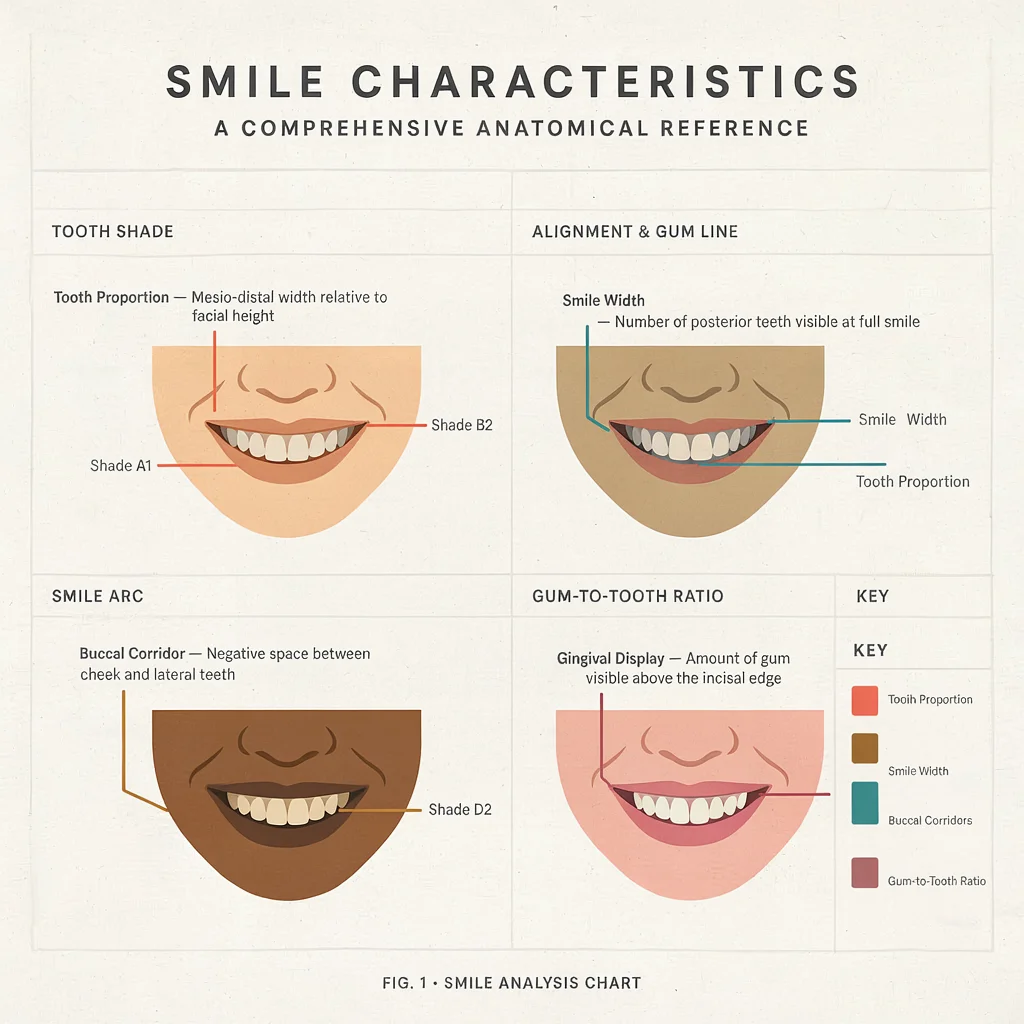
- Tooth shade and brightness
- Tooth shape and size proportions
- Visible alignment and spacing
- Gum line symmetry
- Smile arc (curve of teeth relative to lip line)
- Buccal corridors (spaces visible beside teeth when smiling)
These measurements compare against population norms and established aesthetic guidelines used in cosmetic dentistry. However, aesthetic preferences vary significantly. What one person prefers, another may not. Cultural and individual preferences matter enormously.
Step 3: Facial Proportion Evaluation
The AI evaluates how your smile relates to your facial structure. Tooth size should proportionately match face size. Smile width should align with facial width. These proportions influence overall aesthetic perception.
The system cannot assess three-dimensional bone structure from photographs alone. This limitation is significant. Your orthodontist or prosthodontist needs clinical examination and X-rays to understand your full anatomy.
Step 4: Recommendation Generation
Based on the analysis, the platform suggests treatment categories that might address identified characteristics. These suggestions are educational and exploratory, not prescriptive. Your dentist may recommend entirely different approaches based on clinical evaluation, your health history, and your actual goals.
Limitations of AI Analysis
Artificial intelligence has clear limitations in dental assessment:
- Cannot evaluate bite or jaw function
- Cannot assess bone density or quality
- Cannot detect cavities, gum disease, or infections
- Cannot evaluate tooth structure below the gum line
- Cannot consider your medical history or medications
- Cannot account for oral habits or physiology
- May miss subtle problems visible during clinical examination
These limitations are why professional dental evaluation remains absolutely essential. AI analysis supplements professional judgment—it does not replace it.
Smile Characteristics and Cosmetic Dentistry in the USA
Cosmetic dentistry in the United States is regulated by individual state dental boards. The American Dental Association recognizes cosmetic dentistry as a legitimate dental specialization. However, any licensed dentist can legally perform cosmetic procedures.
The American Academy of Cosmetic Dentistry (AACD) establishes professional standards for cosmetic treatment. Member dentists follow specific protocols and continuing education requirements. Seeking AACD-accredited dentists can provide additional confidence in quality.
Smile transformation means different outcomes for different people. Some seek minor refinements. Others pursue comprehensive changes. Your goals should drive treatment decisions, not industry trends.
Common cosmetic concerns include:
- Tooth discoloration or staining
- Misalignment or spacing
- Worn or chipped teeth
- Missing teeth
- Asymmetrical features
- Gum tissue appearance
Each concern typically has multiple treatment options. Your dentist helps identify which approaches suit your situation. Cost, timeline, and reversibility all factor into treatment selection.
USA-Specific Dental Context
Dental insurance in the United States typically covers diagnostic and preventive care. Cosmetic procedures are rarely covered. Most cosmetic treatment is elective and out-of-pocket. This financial reality affects treatment planning for many patients.
Professional fees vary significantly by region and practitioner experience. Urban areas and specialty practices charge higher fees than general practices. Board certification and special training typically increase costs. More expensive does not always mean better outcomes—but expertise matters significantly.
Cosmetic Dental Treatment Options in Detail
Teeth Whitening: Professional vs. Consumer Products
Professional teeth whitening uses higher-concentration bleaching agents than over-the-counter products. The American Dental Association notes that professional whitening supervised by dentists is generally safer and more effective than consumer alternatives.
Professional whitening systems include:
- In-office treatments (one to two hours)
- Take-home professional kits (two to four weeks)
- Combination approaches
Results vary based on starting shade, enamel thickness, and stain type. Intrinsic stains (inside the tooth) respond less dramatically than extrinsic stains (surface stains). Some stains don’t respond to whitening at all.
Results typically last six months to two years depending on habits. Maintenance treatments keep results refreshed. Sensitivity is the most common side effect, usually temporary.
According to the Journal of the American Dental Association, professional whitening is effective for most patients when properly performed. Results depend heavily on individual tooth anatomy and existing restorations.
Dental Veneers: Permanent Smile Alteration
Porcelain veneers are thin shells bonded to tooth surfaces. They cover discoloration, chips, and mild misalignment. Veneers require permanent tooth preparation—a portion of tooth structure is removed.
The veneer process involves:
- Tooth preparation (removing approximately 0.5-1.0mm of enamel)
- Shade selection and mold taking
- Temporary veneer placement
- Final veneer bonding (one to two weeks later)
Veneers last 10-15 years on average with proper care. They are not reversible—your teeth are permanently altered. Replacement veneers may be necessary eventually.
Veneers cannot be repaired if damaged. They must be replaced. Cost ranges from $900-2,500 per tooth depending on location and provider. The American Academy of Cosmetic Dentistry reports high patient satisfaction with properly executed veneer cases.
Clear Aligners and Traditional Braces
Orthodontic treatment straightens teeth and improves bite. Clear aligners (such as Invisalign) are nearly invisible and removable. Traditional braces use brackets and wires for tooth movement.
Treatment duration typically ranges from 18-36 months depending on complexity. Clear aligners work best for mild to moderate alignment issues. Severe problems may require traditional braces or surgical intervention.
The American Association of Orthodontists (AAO) recommends orthodontic evaluation by age 7. Treatment timing affects outcomes and can prevent future problems. Adults can benefit from orthodontics at any age.
Retention after treatment is lifelong. Teeth naturally shift back toward original positions. Retainers prevent this relapse. Most patients wear retainers nightly indefinitely.
Dental Implants: Permanent Tooth Replacement
Dental implants consist of a titanium post (implant body), abutment, and crown. They represent the most advanced tooth replacement available. Implants restore chewing function and prevent bone loss.
The implant process typically includes:
- Comprehensive evaluation and planning
- Possible bone grafting (if needed)
- Implant placement surgery
- Integration period (3-6 months)
- Abutment placement and final crown
Implants have 95%+ success rates when placed by experienced practitioners. However, they require sufficient bone density and good oral health. Smoking, uncontrolled diabetes, and other conditions affect success rates.
Implants cost $1,500-6,000 per tooth depending on complexity and location. Most dental insurance does not cover implant placement. Some plans cover a portion of the crown.
The Journal of Dental Research reports that properly maintained implants last 20+ years. Maintenance includes regular professional cleaning and proper home care.
Dental Bonding and Minor Corrections
Composite bonding fills gaps and covers minor imperfections. The dentist applies tooth-colored composite resin and shapes it. Bonding is reversible and relatively inexpensive ($150-600 per tooth).
Bonding works best for small gaps and minor chips. It does not address alignment issues or severe discoloration. Bonding materials stain more easily than veneers or natural teeth.
Bonding typically lasts 5-7 years before replacement is needed. It’s an excellent temporary or budget-conscious option.
Oral Health as Foundation for Smile Aesthetics
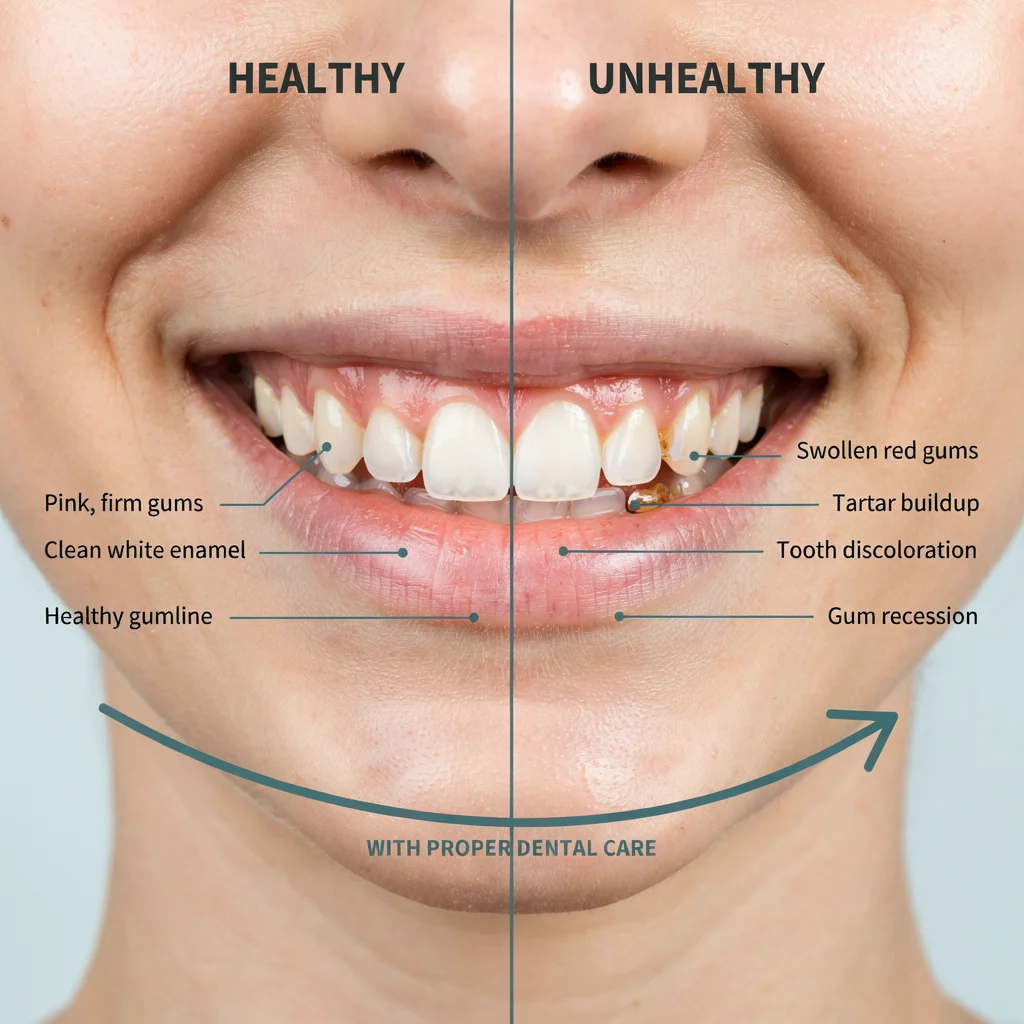
A beautiful smile requires a healthy foundation. This principle is fundamental to dentistry. Diseased teeth cannot appear truly attractive. Gum disease undermines any cosmetic improvements.
The Centers for Disease Control (CDC) reports that nearly half of American adults have some form of periodontal disease. Early detection and treatment prevent progression.
Daily Oral Care Practices
The American Dental Association recommends:
- Brushing twice daily with fluoride toothpaste
- Flossing daily
- Using an antimicrobial rinse if recommended by your dentist
- Limiting sugary foods and acidic beverages
Proper brushing technique matters as much as frequency. Your dentist or hygienist can demonstrate correct technique. Electric toothbrushes can improve cleaning effectiveness for some people.
Flossing removes debris and plaque from between teeth. This is where cavities most commonly begin. Daily flossing is more important than many people realize.
Professional Preventive Care
The ADA recommends professional cleanings every six months for most people. Those with gum disease may need cleanings every three to four months. Regular cleanings remove tartar (hardened plaque) that brushing cannot eliminate.
Professional exams catch problems early. Early-stage cavities require simple fillings. Advanced decay requires root canals or extraction. Gum disease caught early is reversible. Advanced gum disease causes permanent damage.
The CDC emphasizes that oral health connects to overall health. Gum disease is associated with increased risk for:
- Heart disease
- Stroke
- Diabetes complications
- Respiratory infections
- Pregnancy complications
Connection Between Oral Health and Confidence
Patients with healthy teeth smile more frequently. They engage more openly in social and professional situations. Poor oral health often leads to social withdrawal and isolation. This psychological impact matters as much as physical health.
Dental anxiety affects millions of Americans. This anxiety often prevents people from seeking necessary care. Breaking this cycle through gradual exposure and supportive care improves both oral and mental health.
Digital Dentistry Trends in the United States
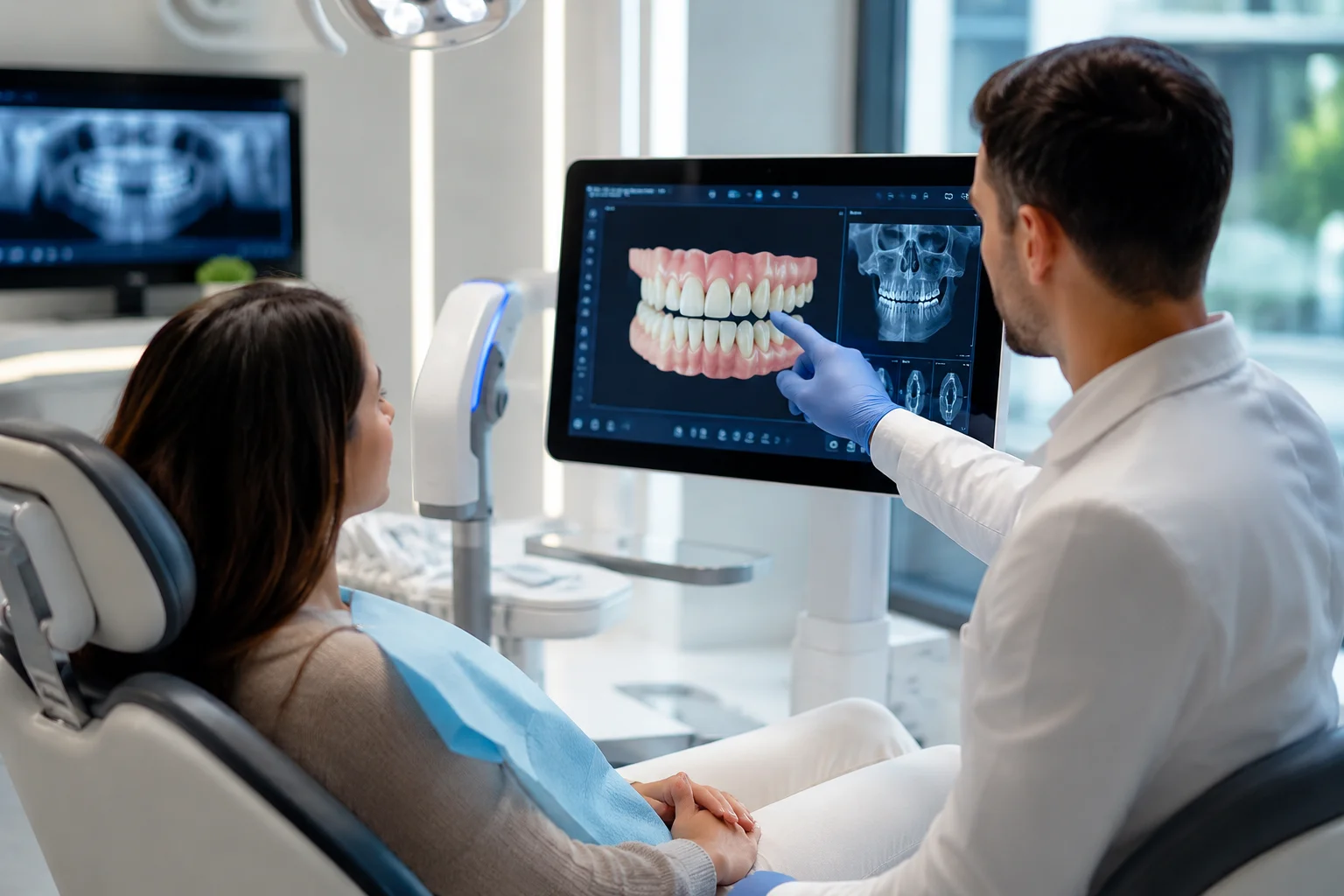
Digital technology is transforming dental practice. However, these tools support dentists—they do not replace professional judgment.
Current Digital Dentistry Applications
Digital imaging reduces radiation exposure compared to traditional X-rays. 3D cone beam computed tomography (CBCT) provides detailed three-dimensional images. These technologies help dentists plan treatment more precisely.
Computer-aided design and manufacturing (CAD/CAM) technology creates crowns and other restorations in a single appointment. Same-day restorations reduce patient time and cost.
Digital smile design software helps communicate treatment options visually. Patients see previews of potential results before treatment begins. This visualization improves communication and satisfaction.
Artificial Intelligence in Dentistry: Current State
AI algorithms can assist with:
- Cavity detection in X-rays
- Periodontal disease staging
- Lesion identification
- Treatment planning support
The American Dental Association emphasizes that AI assists diagnosis—it does not replace professional interpretation. Dentists must evaluate AI suggestions within the clinical context. Professional judgment remains paramount.
AI systems are tools that improve efficiency and consistency. They help dentists see potential issues they might miss. However, false positives and false negatives do occur. Clinical correlation is always necessary.
Limitations and Realistic Expectations
AI cannot assess bite or functional problems. It cannot evaluate the three-dimensional complexity of your mouth. It cannot understand your medical history, medications, or lifestyle factors that affect treatment. It cannot make treatment decisions.
These limitations are why AI-assisted analysis should always lead to professional consultation, not replace it.
Choosing Your Smile Improvement Path

Smile improvement decisions should be thoughtful and informed. Take time to clarify your goals before committing to treatment.
Step 1: Identify Your Specific Concerns
What bothers you most about your smile? Is it color, alignment, shape, or missing teeth? Different concerns require different solutions. Addressing the wrong problem wastes resources.
Take photographs showing what concerns you. Share these with your dentist. Clear communication prevents misunderstandings.
Step 2: Research Treatment Options
Learn about treatments that address your specific concerns. Understand the advantages and limitations of each. Consider:
- Timeline (how long will treatment take?)
- Reversibility (can it be undone if unsatisfied?)
- Maintenance (what ongoing care is required?)
- Cost (what is the realistic investment?)
- Longevity (how long will results last?)
Step 3: Consult With Qualified Dental Professionals
Your dentist understands your specific situation. They can evaluate your teeth, gums, and facial structure. They understand what’s realistic for your case. Their professional guidance is invaluable.
The American Dental Association recommends:
- Seeking dentists who communicate clearly
- Asking detailed questions without rushing
- Understanding all treatment options
- Getting written treatment plans
- Understanding financing arrangements
Consider getting second opinions for major treatment. Different dentists may recommend different approaches. Comparing perspectives helps you make informed choices.
Step 4: Use Supplementary Tools Appropriately
AI Smile Analysis platforms can provide educational information. Use results as conversation starters with your dentist, not as treatment directives. Share the analysis with your dentist. Ask how recommendations align with their professional assessment.
Your dentist may recommend different approaches. That’s appropriate. Professional clinical judgment should guide all treatment decisions.
Frequently Asked Questions
Q: Is BrassSmile a substitute for dental consultation?
A: No. BrassSmile is an educational tool designed to help patients understand smile assessment concepts. It cannot diagnose dental conditions, assess bite or bone structure, or replace professional examination. All treatment decisions should be made with a licensed dentist.
Q: How accurate is AI smile analysis?
A: AI can identify common patterns and characteristics visible in photographs. However, it has significant limitations. It cannot assess three-dimensional structure, bone quality, underlying health issues, or functional problems. Clinical examination by a dentist is always necessary for accurate assessment.
Q: Should I do AI analysis before seeing my dentist?
A: AI analysis may help you prepare for your appointment. It can help organize your thoughts about what concerns you. Share results with your dentist for discussion. However, it should not replace or delay professional consultation for actual dental concerns.
Q: Are cosmetic dental treatments covered by insurance?
A: Most cosmetic procedures are elective and not covered by dental insurance. Coverage varies by plan. Check with your insurance company about specific procedures. Some restorative procedures (implants, crowns) may have partial coverage.
Q: How long do cosmetic dental results last?
A: Longevity varies by treatment:
- Whitening: 6 months to 2 years
- Bonding: 5-7 years
- Veneers: 10-15 years
- Implants: 20+ years with proper care
- Aligners: Permanent if retention is maintained
Your dentist can discuss specific longevity for your treatment plan.
Q: What are the risks of cosmetic dental treatment?
A: Risks vary by procedure. Common considerations include:
- Tooth sensitivity (whitening)
- Permanent tooth alteration (veneers)
- Gum recession (aggressive whitening)
- Implant failure (implants)
- Decay under restorations
Your dentist should discuss specific risks for your planned treatment.
Q: How do I find a qualified cosmetic dentist?
A: Consider:
- General dentistry degree from accredited dental school
- Additional cosmetic dentistry education or certification
- Membership in professional organizations (ADA, AACD)
- Patient reviews and before/after photos
- Clear communication and treatment planning
- Willingness to discuss realistic expectations
The American Academy of Cosmetic Dentistry (www.aacosmeticdentistry.org) maintains a directory of member dentists.
Q: Can cosmetic dentistry fix serious dental problems?
A: Cosmetic dentistry improves appearance. Restorative dentistry fixes functional problems. Many cases require both approaches. Your dentist can explain which procedures address which concerns.
Starting Your Smile Improvement Journey
Your smile improvement journey begins with clear understanding and professional guidance. BrassSmile may serve as one tool in that journey. However, your licensed dentist remains the essential professional.
Next Steps:
- Clarify Your Goals: What specifically do you want to change about your smile? Be specific in your thinking.
- Research Options: Learn about different treatments that address your concerns. Understand basics before consultation.
- Schedule Consultation: Book an appointment with a licensed dentist. Share your goals clearly.
- Ask Questions: Understand recommended treatments completely. Don’t rush important decisions.
- Get Written Plan: Ask for a written treatment plan with timeline and costs.
- Make Informed Decision: Choose treatments based on professional recommendation and your comfort level.
Important Reminders:
- AI analysis tools are educational, not diagnostic
- Your dentist makes all final treatment recommendations
- Realistic expectations prevent disappointment
- Quality work takes time and investment
- Ongoing care maintains results long-term
- Your comfort and understanding matter throughout
Explore Our Smile & Dental Care Guides
Go deeper on specific topics covered in this guide:
- How Accurate Is AI Smile Analysis, Really?
- Teeth Whitening: At-Home vs Professional
- Dental Veneers Cost Guide
- Invisalign vs Braces for Adults
- Dental Implants: What to Expect
- Composite Bonding vs Veneers
- Power Chain Braces Explained
- 7 Signs You Might Need a Smile Makeover
- Clear Aligners for Teens vs Adults
- Tongue Scraping Benefits
- Crooked Teeth Correction: Your Complete Guide
References and Authoritative Sources
Professional Organizations:
- American Dental Association (ADA): www.mouthhealthy.org
- American Academy of Cosmetic Dentistry (AACD): www.aacosmeticdentistry.org
- American Association of Orthodontists (AAO): www.aaoinfo.org
- American Academy of Periodontology (AAP): www.perio.org
Clinical Research:
- Journal of the American Dental Association
- Journal of Dental Research
- American Journal of Orthodontics and Dentofacial Orthopedics
- International Journal of Prosthodontics
Government Health Resources:
- Centers for Disease Control and Prevention (CDC) – Oral Health: www.cdc.gov/oralhealthdata
- National Institute of Dental and Craniofacial Research (NIDCR): www.nidcr.nih.gov
- MedlinePlus Dental Health: www.medlineplus.gov
Key Research Findings Referenced:
- CDC data on periodontal disease prevalence in American adults
- ADA guidelines on professional whitening safety
- AAO recommendations on orthodontic treatment timing
- NIDCR information on dental implant success rates
Author and Reviewer Credentials
Dr. Sarah Mitchell, DDS, MBA
- Doctor of Dental Surgery from University of Pennsylvania School of Dental Medicine
- MBA in Healthcare Management from Northwestern University Kellogg School
- 12+ years experience in cosmetic and restorative dentistry
- Continuing education in digital dentistry and CAD/CAM technology
- Published articles on patient communication in cosmetic dentistry
Dr. James Chen, DMD, Prosthodontics Specialist
- Doctor of Dental Medicine from Harvard School of Dental Medicine
- Specialty Certificate in Prosthodontics from Boston University
- 15+ years experience in restorative and implant dentistry
- Diplomate of the American Board of Prosthodontics
- Lecturer in prosthodontics at major dental schools
Disclaimer: This content is for informational purposes only. It is not medical or dental advice. Always consult with a qualified licensed dentist for dental concerns, diagnosis, or treatment recommendations. The information presented is accurate to the best of current knowledge but may change as new research emerges. Individual results vary. BrassSmile’s AI analysis is a supplementary tool only and should never replace professional dental evaluation.