
Gum Health 101: Gingivitis, Periodontitis and Why Gums Come Before Whitening
Introduction
Effective gum disease prevention is the most critical step in maintaining long-term oral health. Prioritizing gum disease prevention ensures that your teeth remain supported by a stable and healthy foundation.
Data from the Cleveland Clinic indicates that nearly 50 percent of adults in the United States experience some form of periodontal disease. Pursuing aesthetic dental procedures like whitening provides little value if the underlying foundation of your mouth is already compromised by infection or inflammation. Understanding the baseline for oral wellness is essential, as healthy gums are firm to the touch and do not bleed or swell. This article explores the progression of periodontal issues and explains why clinical stability must always come before cosmetic enhancements.
Why Prevention Beats Whitening

Focusing on oral health stability is essential before pursuing aesthetic enhancements, as a healthy foundation ensures that cosmetic results are both safe and effective. While many patients desire a brighter smile, prioritizing the integrity of your gingival tissue prevents complications that could undermine your investment.
Whitening agents and surface treatments often rely on chemical reactions that can be harsh. If inflammation is already present, these products may cause significant irritation to vulnerable tissues. Healthy gums are firm to the touch and do not bleed or swell, providing a stable base for any cosmetic procedure. Ignoring early warning signs can lead to discomfort or uneven outcomes during whitening.
Choosing to maintain oral health rather than seeking quick cosmetic fixes offers a more lasting and reliable way to achieve a high-quality smile. According to the Cleveland Clinic, periodontal disease affects nearly 50 percent of the adult population in the United States. A proactive approach to keeping tissues clean and resilient is the most effective path to lasting dental wellness. When you address the health of your gums first, your smile remains not only brighter but also structurally sound.
Identifying Early Gum Disease

Early shifts in oral health often appear as subtle changes in tissue color or texture. Healthy gums are firm to the touch and do not bleed or swell. In contrast, diseased tissue may look red, puffy, or bleed during brushing, which are common signs of gingivitis.
The mouth relies on specialized structures for stability. The gingival sulcus is the small, V-shaped crevice between the tooth and the surrounding gum tissue. Deepening of this space often indicates the onset of infection. Supporting the tooth root within the jawbone is the periodontal ligament, a group of fibers that act as a shock absorber. When infection progresses, these structures become compromised.
Dental plaque is the number one cause of periodontal disease. This sticky film of bacteria constantly forms on teeth and irritates the gums. If left to accumulate, it triggers an inflammatory response that can lead to permanent damage. Given that periodontal disease is the leading cause of tooth loss and affects nearly 50 percent of the adult population in the United States, regular monitoring of these tissues is essential for preserving long-term oral stability.
Stages of Gum Infection
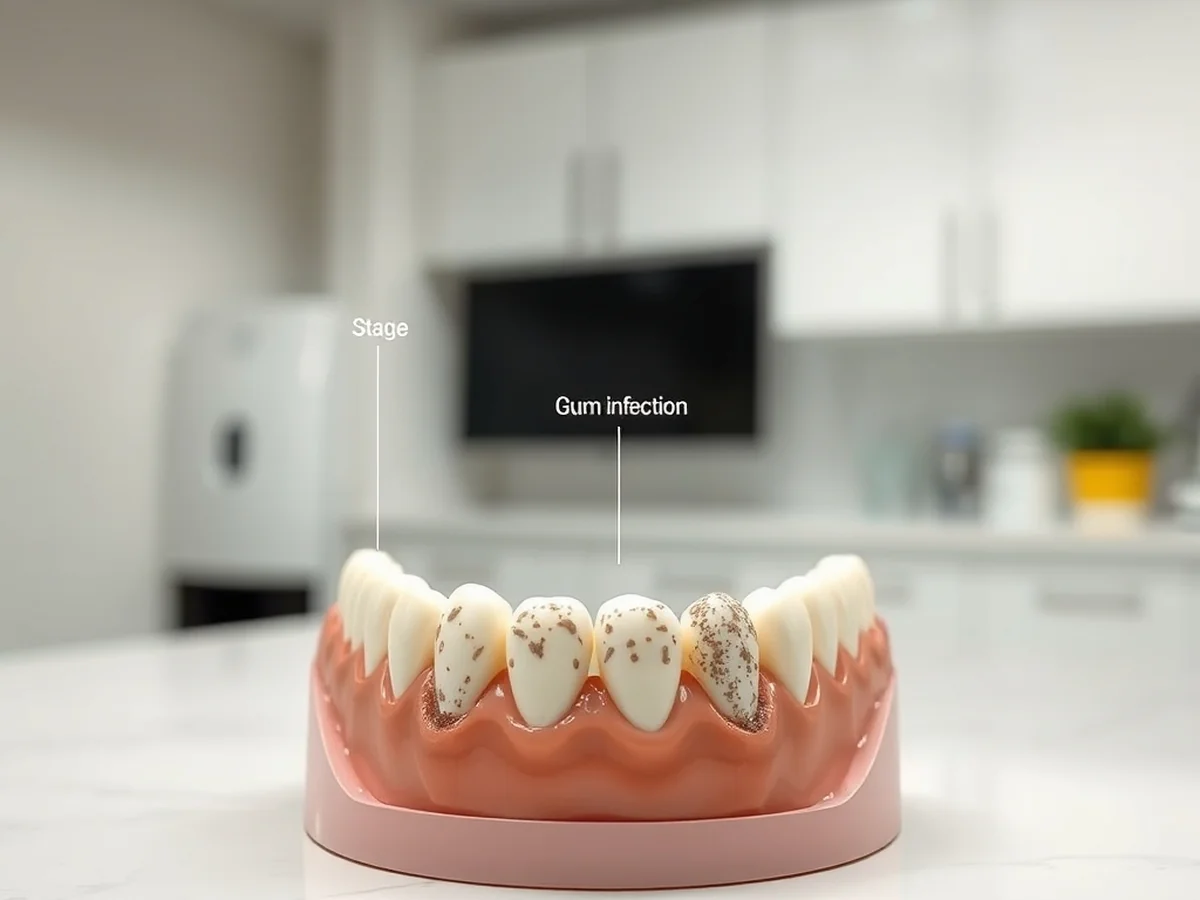
Periodontal disease begins with the accumulation of dental plaque, the primary cause of infection, and progresses through distinct stages. Understanding these stages of periodontal disease is vital for maintaining oral wellness, as early intervention can stop permanent damage.
| Stage | Primary Condition | Reversibility |
|---|---|---|
| Early | Gingivitis | Reversible |
| Advanced | Periodontitis | Irreversible |
Gingivitis represents the initial phase of infection. According to the CDC, gingivitis is reversible with proper care. Common signs of gingivitis include swollen or bleeding gums, which are often the first indicators that the tissue is inflamed.
If left unaddressed, the infection can deepen, moving past the gums and into the supporting structures of the teeth. Once the infection leads to bone loss, the condition becomes too advanced to reverse. This progression is significant because periodontal disease is the leading cause of tooth loss.
Given that roughly 50 percent of the adult population in the United States experiences some form of gum disease, routine monitoring by a dental professional is essential. Regular checkups help identify issues before they reach a stage where bone density is permanently compromised.
Spotting Early Gum Symptoms

You can identify early issues by watching for changes in tissue color, texture, and reactions during your daily routine. Healthy gums are firm to the touch and do not bleed or swell, so any deviation from this state requires professional attention to avoid long term damage.
- Redness in the gum line often signals the early stages of inflammation.
- Swelling or puffiness indicates that your body is reacting to the presence of plaque bacteria.
- Bleeding during brushing or flossing is one of the most common signs of gingivitis.
- Persistent bad breath may occur as bacteria accumulate in the mouth.
- Receding gums can reveal more of the tooth surface, which may feel sensitive to temperature.
- Increased tooth mobility suggests that the underlying structures supporting your teeth have been compromised.
According to the National Institute of Dental and Craniofacial Research, periodontal disease is the leading cause of tooth loss. Because gum disease affects nearly 50 percent of the adult population in the United States, recognizing these periodontitis symptoms early is vital. While gingivitis is reversible, once bone is lost around teeth due to infection, the condition is too advanced to reverse.
Core Strategies for Gum Disease Prevention

- Brush your teeth twice daily using a soft-bristled brush, angling the bristles at a forty-five-degree angle toward the gumline to clean the gingival sulcus effectively.
- Use dental floss or interdental brushes at least once a day to reach the tight spaces between teeth where standard brushing cannot disrupt plaque biofilm.
- Apply gentle, circular motions during brushing to avoid damaging delicate gum tissue while still lifting away food particles and bacteria.
- Clean every surface of every tooth, including the hard-to-reach areas behind your molars, to maintain a thorough hygiene standard.
- Replace your toothbrush every three to four months, or sooner if the bristles become frayed, to ensure you are consistently removing debris.
Risk Factors for Gum Disease

Your susceptibility to oral infections is influenced by a combination of genetics, lifestyle habits, and bacterial exposure. Understanding these factors is a critical step in how to stop gum disease before it compromises your oral health.
Genetics is a factor in your susceptibility to the specific types of oral bacteria that cause gum disease. Your unique biological makeup can influence how your immune system responds to these pathogens, making some individuals more prone to inflammation than others.
Beyond your internal biology, external transmission plays a role. Gum disease bacteria can be transmitted through repeated and long term contact between individuals. This means that sharing items that come into contact with saliva can introduce new bacterial strains into your oral environment.
Finally, your daily eating habits significantly impact your mouth’s ecosystem. Frequent snacking creates a cycle of continuous acid and bacterial exposure. Because saliva needs time to neutralize acids after you eat, constant snacking prevents the mouth from returning to a healthy pH balance, providing an ideal environment for harmful bacteria to thrive.
Dental Checkups for Gum Health

Professional dental visits are essential for managing calculus buildup and catching early signs of periodontal disease. Regular cleanings remove hardened deposits that home care cannot reach, helping you maintain healthy, firm gums.
During a comprehensive periodontal evaluation, your dentist follows standards set by the American Dental Association to monitor your oral health. This thorough assessment looks beyond the surface to ensure your support structures remain intact.
A common practice involves using a periodontal probe to measure the depth of the spaces, or pockets, between your teeth and gums. This diagnostic tool helps clinicians track the stages of periodontal disease by assessing whether bone loss has occurred. These measurements identify areas where infection may be lingering deep under the gumline.
- Frequency of visits is tailored to your individual health status.
- Professional cleanings stop the progression of inflammation caused by plaque biofilm.
- Consistent monitoring allows for timely intervention before permanent damage occurs.
By keeping up with these appointments, you address issues while they are still reversible. Prioritizing these evaluations provides the foundation for long term oral stability.
Actionable Steps on How to Stop Gum Disease Early

You can effectively manage early gum issues by addressing plaque buildup immediately through improved daily habits and professional intervention. Healthy gums are firm to the touch and do not bleed or swell. If you notice persistent bleeding or sensitivity, schedule a dental visit right away to assess your oral health.
Prompt professional treatment is essential because gingivitis is reversible. During a visit, a dentist typically uses a periodontal probe to measure the depth of the pockets around your teeth. This assessment helps determine if you are in the early stages of disease or if the condition has progressed. Once bone is lost around teeth due to infection, the disease is too advanced to reverse, making early action the primary way to protect your smile.
Lifestyle adjustments also play a critical role in supporting your periodontal health:
- Quit smoking or using tobacco products, as these significantly impair gum healing and increase infection risk.
- Manage chronic stress, which can weaken your immune system and make it harder for your body to fight oral bacteria.
- Maintain a consistent daily oral hygiene routine to disrupt plaque biofilm before it hardens into tartar.
Understanding Periodontal Disease and Oral Stability
Periodontal disease is a chronic inflammatory condition that affects the tissues surrounding and supporting your teeth, and it is recognized as the leading cause of tooth loss. Recent data indicates that nearly 50 percent of all adults in the United States experience some form of this condition, which is primarily triggered by the accumulation of dental plaque. When left untreated, this infection can damage the bone and periodontal ligament that anchor teeth in place, compromising your overall oral stability.
Whether the condition can be reversed depends entirely on the stage of the disease. Gingivitis, which is the early stage of periodontal disease, is reversible through improved oral hygiene. However, once bone is lost around teeth due to infection, the disease is too advanced to reverse. At this point, the focus shifts to managing the infection and preventing further deterioration.
Dental professionals treat these issues by first removing the primary culprit: plaque biofilm and calculus. During a professional cleaning, your dentist may use a periodontal probe to measure the depth of the pockets around your teeth, helping to assess the extent of bone loss. In more advanced cases, deep cleaning procedures like scaling and root planing are used to clear bacteria from beneath the gum line.
Healthy gums are firm to the touch and do not bleed or swell. If you notice persistent bad breath, gums that bleed during brushing, or teeth that feel loose, you should schedule an appointment with your dentist promptly. Because genetics and the transmission of bacteria through long-term contact can influence your susceptibility to the disease, early intervention is essential for effective gum disease prevention. Consistent care, including daily flossing and professional monitoring, remains the most reliable way to maintain healthy gums and prevent the long-term consequences of periodontitis.
Frequently Asked Questions About Gum Health
Can I reverse early inflammation at home?
Yes, gingivitis is reversible by strictly following a consistent daily oral hygiene routine that removes plaque from the gum line. If your gums remain inflamed despite thorough brushing and flossing, you should consult a dental professional to rule out more advanced stages of periodontal disease.
Why does my dentist use a metal probe during my checkup?
A periodontal probe is used to measure the depth of the gingival sulcus, or pocket, around your teeth to check for signs of bone loss. This simple, painless measurement helps your dentist determine if you have healthy gums or if you are developing periodontitis symptoms.
Is gum disease contagious?
The bacteria responsible for gum disease can be transmitted through repeated and long-term contact, such as sharing saliva. While this does not mean you will automatically develop the disease, it highlights the importance of maintaining your own oral health to protect against external bacterial loads.
Why are my gums bleeding if I brush regularly?
Bleeding gums are a primary warning sign of inflammation, often caused by plaque accumulation that has not been fully removed. You should see a dentist to assess if these issues indicate that your current cleaning technique needs adjustment or if you require a professional cleaning.
How does genetics affect my risk of gum disease?
Genetics is a factor in your personal susceptibility to the specific oral bacteria that lead to periodontal disease. Even with excellent hygiene, some individuals may have a higher biological predisposition, making regular professional monitoring a critical part of their long-term health strategy.
Conclusion
The most important next step is to schedule a professional dental evaluation if you notice your gums bleed, swell, or feel tender. A dentist will typically use a periodontal probe to assess your gum health and determine if you are in the early, reversible stages of disease or if professional intervention is required. Prioritizing gum disease prevention over cosmetic procedures ensures that your teeth have a stable, healthy foundation before you pursue aesthetic improvements. By addressing plaque buildup today, you can stop the progression of disease and protect your long-term oral health.
You might also like: Fix Brasssmile at Home: 7 Proven Methods That Work